
Why Everyone Needs AI Literacy
AI literacy is fast becoming an essential skill, so don't get left behind!

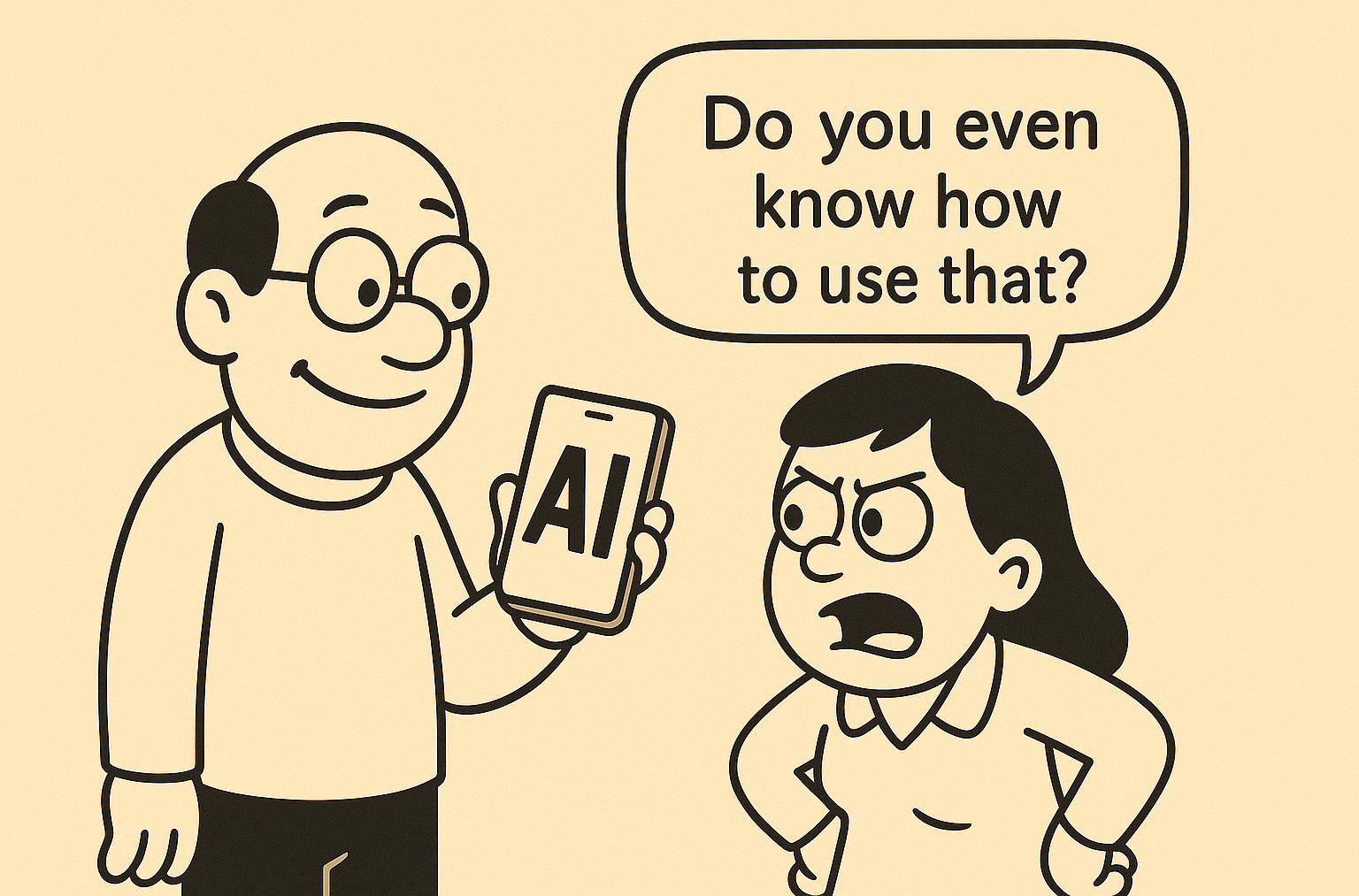
Everyone needs to learn AI literacy, just as we all had to learn how to use the internet or a mobile phone. AI is already part of our everyday lives, yet most people underestimate just how significantly it will shape their lives in the years ahead. Whether you’re working, studying, job hunting or retired, a basic understanding of what AI is (and what it can and can’t do) is fast becoming essential. AI is often misunderstood, misused, and overhyped in the media. For instance, headlines often claim AI will 'replace all jobs' in certain industries which oversimplifies reality. So what really is AI, and why should you care about being AI literate?
What is Artificial Intelligence?
Let’s start with the basics. Artificial Intelligence, or AI, is a broad term for machines that can mimic certain aspects of human intelligence, usually by spotting patterns in data and making predictions. Most of the AI we use today isn’t conscious (although there is starting to be some debate about that which is a topic for another day) and it's more like a supercharged calculator with a lot of training.
There are two main types of AI you need to know about:
Analytical or Traditional AI, often called machine learning, powers many of the systems we interact with every day. When your email filters out spam, that’s AI. When your phone suggests the next word while you’re texting, that’s also AI. AI is behind Spotify and Netflix recommendations, voice recognition on your smart speaker, the route suggestions in your maps app, and even the fraud alerts from your bank. These tools are trained on vast amounts of data and are good at doing one particular task, such as spotting patterns, making predictions, classifying data, or flagging outliers. This type of AI has been around for many years, and is mostly confined to more technical roles, although the use cases are broadening and will continue to do so.
Generative AI creates new content based on patterns it has learned. Tools like ChatGPT, Gemini, Midjourney, Suno and Claude which can generate text, images, music, and code fall into this category. They use the data they have seen during training to produce an original output. The key thing to understand is that these systems predict what is likely to come next in a sequence when they generate their outputs, whether that is a word, a line of code, or part of an image. This works surprisingly well in many cases, but it also means they sometimes produce false or misleading information, which is known as a hallucination. Generative AI has only really been around in the public domain since the launch of ChatGPT in late 2022 and when you hear hype about AI writing novels, creating art, coding entire applications, or replacing creative professionals, it's most likely that people are referring to generative AI.
You don’t need to be an AI expert to use AI, but knowing the basics, like the difference between analytical and generative AI, helps you ask better questions and make more informed choices about if and when you should use AI. Once you move past the jargon and hype, AI becomes less intimidating, far more interesting and most importantly, far more useful.
Why do I need AI literacy?
Thankfully becoming AI literate is relatively simple. Here’s why it's important for everyone:
Work and learning are changing fast: AI is already reshaping how jobs are done, how people learn, and how we adapt to new tools. Whether you’re starting out, mid-career, or trying to keep up with the latest changes in your field, understanding how AI works helps you stay relevant and confident, rather than overwhelmed or left behind. Students are the largest demographic of AI users and they'll be joining the workforce soon, so companies are adapting their hiring to attract the brightest talents. Duolingo and Shopify have recently announced AI-first strategies that increasingly value AI literacy at all levels of their organisations, and I expect many more companies to follow.
It helps you spot when something isn't right: AI-generated content isn't always reliable. A concerning example is deepfakes - manipulated videos or images that use AI to show people saying or doing things they never actually did - which can range from celebrity face-swaps in movies to dangerous misinformation like fake political speeches or fabricated evidence. As AI tools become more accessible, being able to identify potential deepfakes is becoming an essential digital literacy skill, just like recognizing phishing emails. Sometimes AI-generated content is wrong intentionally as a deepfake, but sometimes it's biased, and sometimes it just sounds convincing while being completely made up. AI literacy helps you develop a sharper eye and equips you to ask better questions about the content you see.
It helps you make smarter, more responsible choices: Being AI literate means knowing when to use AI and how to use it wisely. You’ll understand how AI works, know what it can do, when to trust its outputs, when to double-check, and when a human decision is still the better call.
It helps the next generation: Young people are growing up surrounded by AI in their apps, their games, and even their schoolwork. As parents, educators and role models we have a responsibility to understand these tools, so we can offer guidance, ask the right questions, and model responsible use.
It unlocks new kinds of creativity: AI isn’t just about speed or efficiency and it can also be a creative partner, helping you write, design, brainstorm or build. But to use it well, you need to understand how it works, and where human intervention, oversight and collaboration are required. People argue that AI can't be creative, however when it's used as a collaborative tool, AI can enhance your creativity.
How to start developing your AI Literacy
Now we've discussed why it's important, let's dive into how to develop your AI literacy. There are already many training programs going on across organisations and even across entire countries to upskill on AI Literacy, so developing AI literacy isn't just your personal responsibility. Both the US and Chinese governments have recently announced huge investments in AI upskilling, including programs to embed AI literacy in education from a young age, and I'd expect the EU and UK to follow. Your workplace or place of study may already offer an AI literacy programme, but if not, I strongly encourage you to start developing these skills yourself. The good news is that you don’t need to take a course or read a textbook to start learning how to use AI. The best way to learn is by doing, so please ensure that whatever training you do includes actually using the tools. The time you invest in learning these tools is likely to be repaid many times over, and I also expect you'll have some fun as you learn. Here are four simple ways to get started:
Get hands-on and curious: The simplest and most effective way to learn about AI is to use it. Try tools like ChatGPT, Gemini or Claude and see what they can do, and just as importantly, what they can’t do. They all have free versions which are more than good enough to get started. Here's an example to try: Open an AI tool and type 'You are an AI expert, and I'm learning about AI literacy. Explain three ways AI might help me in my daily life, and one limitation I should be aware of.' Then try modifying your prompt to see how the response changes. The more time you spend experimenting, the more comfortable and confident you will become. Start with small, everyday tasks like drafting an email, summarising a news article, or planning a trip, and get used to how the tool responds so you can begin to find uses for it in your daily life.
Learn the basics of prompting: How you ask (known as 'prompting') matters with AI and there are many techniques for effective prompting. One powerful and basic technique I recommend to start with is the Role - Task - Format (RTF) approach. For example, you might say, "You are a careers adviser. Give me three job options for someone who enjoys working outdoors, in a bullet-point list." or "You are an experienced chef. Suggest a healthy dinner recipe for four people using chicken, spinach, and sweet potatoes, formatted with ingredients list first followed by step-by-step instructions." This technique works across most scenarios and the clearer your prompt, the better results you will get.
Get into the habit of asking for help: Whenever you’re stuck on anything - whether it’s a work-related problem, planning a holiday, writing a tricky message, or working out how to fix a dripping tap - try using AI to see if it can help you. You'll be amazed at what it can do, and while it might not solve everything, it can often point you in the right direction or at least give you a helpful first draft.
Don’t take AI responses at face value: Even when AI sounds confident, it is not always correct. Get into the habit of checking important answers, especially if they involve facts, names, or numbers. AI can be incredibly helpful, but it still needs human judgement alongside it.
I've also found following experts on LinkedIn to be a useful way of learning. There are many self-proclaimed experts on LinkedIn and most of them regurgitate information from elsewhere, so it's important to separate out the real experts who produce original and useful content. I highly recommend following both Allie Miller and Ethan Mollick. Allie is the most followed person in AI business with over 2m followers. She presents AI in a very accessible way, and provides lots of practical hands-on tips. She also has a simple email course called AI with Allie which is a great way to get started with AI. Ethan is more academic, and shares lots of interesting uses and research, and is particularly useful to follow for those of you who work in the education industry. His free AI in Education Coursera course is also highly recommended and only takes a few hours to complete.
The Red Giant says
AI literacy is a crucial skill for all of us. Thankfully it's not difficult or technical to learn, and most people have a lot of fun learning how to use the AI tools. Whatever stage you're at, I encourage you to put aside some time each week to experiment with AI, and you'll be amazed at what you can do and where it can help. AI tools are evolving quickly, but the fundamentals of AI literacy will remain true regardless of which AI model you use. The image generation ability of ChatGPT has improved hugely over the past couple of months, so I recommend giving that a try if you haven't already done so. Also, remember that AI doesn't only have to be about work either and it can be used for fun too - one of my favourite AI tools is Suno which gives users the ability to create songs from a single line of text!
Coming Up Next
Next time in The Red Giant I'll be exploring why so many people aren't getting the most out of AI and provide practical tips to enhance your AI productivity. In future editions, I'll also address common concerns about AI including privacy considerations, the environment, job displacement fears, and how to evaluate the reliability of AI-generated information.